





The Building Stones of Suffolk and the People Who Worked Them

|
| The Building Stones of Suffolk and the People Who Worked Them, Tony Redman, Suffolk Institute of Archaeology and History, 2025, 220pp. |
At first sight this might seem an unlikely title for a book, to be shelved between Mountain Climbing in Norfolk and Famous Swiss Admirals. Suffolk is best known for timber-framed houses and flint churches, but for a county in which there is no true freestone there are in fact a large number of buildings that include a surprising range of stones in their construction. Tony Redman is a chartered building surveyor with conservation accreditation, for many years a partner in the Bury St Edmunds practice Whitworth and with deep hands-on experience of Suffolk’s church buildings. To this he has added a systematic inspection and sampling of all the stone-built churches and public buildings in Suffolk.
Flint does of course predominate, and Redman shows that nearly 75 per cent of all church buildings in Suffolk contain black knapped flint. Other local stones, some barely deserving of the name, include septaria, famously used for Orford Castle, but profitably crushed in the 18th and 19th centuries to make Roman cement. It is hardly surprising that some excellent artificial stone, notably Pulhamite and Lignacite, originated in Suffolk, and they have their place in this book too.
Parish churches made do with flint and whatever else came to hand, but that was not good enough for Bury St Edmunds abbey, built of Barnack stone. Redman describes in fascinating detail how this was procured and transported (an annual payment of 4,000 eels comes into the story), and goes on to show how Barnack was used for the quoins of churches in parishes controlled by the abbey, predominantly in the west of the county. By contrast, as one of the useful maps clearly demonstrates, the quoins of churches in the eastern parts are of Caen stone, more accessible from the coast and estuaries to which it was brought from France.
Freestones and walling stones are dealt with in turn, the characteristics and origins of each described, and examples given of the ways in which they are used in and on Suffolk buildings, not just churches (including Victorian restorations) but also domestic and commercial buildings of all periods. Redman is well qualified to write with authority about the way in which different stones behave, and anyone working with stone buildings in any part of the country will find this book a useful guide and manual.
‘The people who worked them’ is an add-on, of mainly local interest for its list of Suffolk stonemasons down to 1999. It is a bit of a ragbag, with some masons seemingly known only for the manner of their death, such as George Kerridge, who survived the Boer war only to be crushed by a Yorkstone slab. At least two are phantoms: ‘Spooner’ was not a monumental and stone mason from Hadleigh, but the architect Charles Spooner, who restored the parish church.
Similarly William White was the architect for the restoration of Stowlangtoft church and not the mason responsible for its ‘gawky’ pulpit. But these are minor wobbles in a well-illustrated work packed with information and full of surprises. Who knew that the rounded flints used to face some houses in Brandon are left over from the production of gunflints?
This article originally appeared as ‘Yours for 4,000 eels ’ in the Institute of Historic Building Conservation’s (IHBC’s) Context 187, published in December 2025. It was written by James Bettley, author of the Pevsner Architectural Guides Suffolk: East and Suffolk: West (Yale University Press, 2015).
--Institute of Historic Building Conservation
Related articles on Designing Buildings
IHBC NewsBlog
Busaries open for IHBC's Annual School 10-12 June 2027

Apply for funded places for #IHBCBristolBath2027 until 1 February 2027
London's oldest restaurant given to National Trust

Rules will continue to open and income will fund conservation
No right to cross-pavment charging in England's conservation areas

Residents excluded from new permitted development rights
Save the Date for #IHBCBristolBath2027 on 'Climate Change & Significance'

Register now for updates on IHBC's Annual School 10-12 June 2027
Bath could pause UNESCO World Heritage Site status
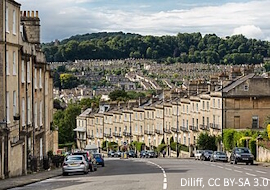
Consultation on scheme to hit housing targets runs until 30 October 2026
Canals offer increasing innovation opportunities
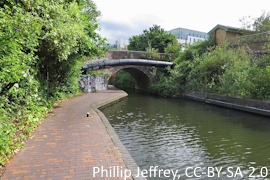
Canal & River Trust sees canals playing role in UK's water security
IHBC sponsors Gardens Trust event 23-4 Sept 2026

'Learning from the Past, Shaping the Future’ takes place in Milton Keynes
Renovations to Frank Lloyd Wright's Fallingwater complete

World Heritage Preserved project opens house for tours again
Shakespeare Birthplace Trust places Hall's Croft on HAR Register
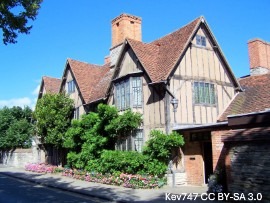
Stratford-upon-Avon home of Shakespeare's daughter is 'At Risk'
Lady Grange’s House repaired on St Kilda

National Trust for Scotland repairs stone cleit with link to famous island resident
Griff Rhys Jones on BBC Radio 4 Today programme

The Victorian Society’s President unveiled its latest Top Ten Endangered Buildings 2026.
Need a MATE? Book your place now.
IHBC offers free webinars on applying for IHBC accreditation (Full & Associate).
UK Stained Glass Repository finds windows new homes
How are stained glass windows are rescued, stored and repurposed?
APPGEBE report sets high aims for quality
'Government must not sacrifice quality in drive to build 1.5m homes'
New measures protect Historic Shipwrecks from heritage crime

Underwater cultural heritage benefits from new HE guidance
How could the City of London skyline look in 6 years' time?

Visualisation shows approved planning applications as completed buildings
National Trust for Scotland calls for VAT cuts
Heritage neglect is encouraged by current policies
IHBC's 'Context' Issue 186 features Industrial Heritage
IHBC's members' journal reports on the challenges of conserving infrastructure
Book now for IHBC Annual School 2026

IHBC Annual School is taking place 18-20 June 2026 in Newcastle
RICHeS Research Infrastructure offers ‘Full Access Fund Call’
RICHeS offers a ‘Help’ webinar on 11 March
Latest IHBC Issue of Context features Roofing
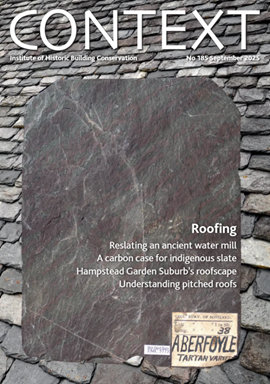
Articles range from slate to pitched roofs, and carbon impact to solar generation to roofscapes
Three reasons not to demolish Edinburgh’s Argyle House

Should 'Edinburgh's ugliest building' be saved?
IHBC’s 2025 Parliamentary Briefing...from Crafts in Crisis to Rubbish Retrofit
IHBC launches research-led ‘5 Commitments to Help Heritage Skills in Conservation’
How RDSAP 10.2 impacts EPC assessments in traditional buildings

Energy performance certificates (EPCs) tell us how energy efficient our buildings are, but the way these certificates are generated has changed.